 PlantPal
Rubber plant yellow leaves: causes and what to check
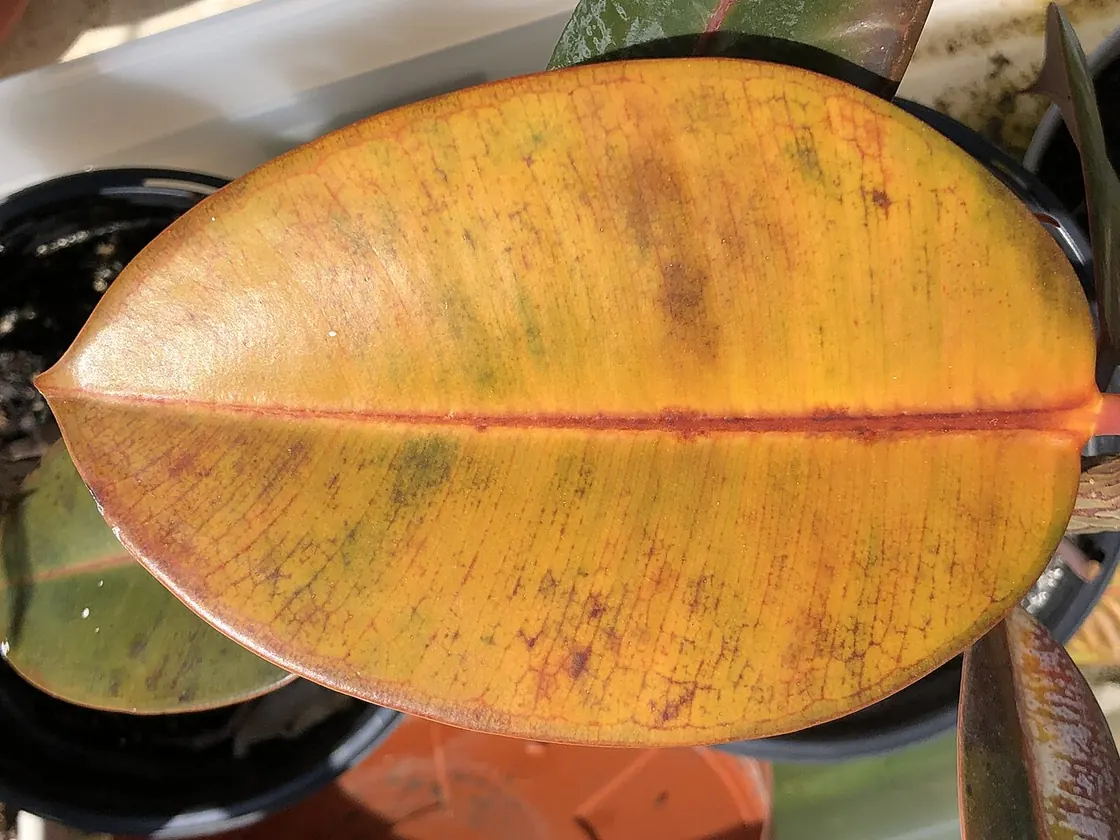
Several yellow leaves on a rubber plant often point to potting mix staying wet too long, especially in low light. First feel the mix a few centimetres down and check that the pot drains freely.
Why it happens on a rubber plant
Ficus elastica is a tropical evergreen tree from South and Southeast Asia. Indoors, it grows upright on woody stems and carries large, thick, leathery leaves. Its roots need air as well as moisture, so dense mix or a pot that holds water can keep roots wet for too long. Older leaves are shed as the plant grows, usually from the lower stem.
Likely causes, most common first
Mix staying wet
How to tell. If several leaves yellow, feel the mix below the surface and lift the pot. A pot that feels heavy and mix that stays damp suggest slow drying. Check that drainage holes are open and that the pot is not standing in water.
What to do. Empty any saucer or outer pot and let the mix dry somewhat before watering again. When the mix is dry below the surface, water thoroughly and let the pot drain. If it remains wet for a long time, check the roots and consider repotting into fresh, free-draining mix.
Too little light
How to tell. In a dim spot, a rubber plant uses water more slowly, so its mix can stay wet and roots can become stressed. Growth may also be slow or lean toward a window. Compare how quickly the mix dries with how it dries in a brighter position.
What to do. Move the plant to a brighter spot with indirect light, making the change gradually. Keep it away from harsh direct sun if it is not used to it. Continue checking the mix before watering, since it may dry faster in the brighter location.
Mix becoming very dry
How to tell. A very dry mix, a noticeably light pot, and drooping leaves can point to too little water. Yellowing may follow prolonged dryness or repeated swings between very dry and very wet mix. Check the mix below the surface rather than judging by the leaves alone.
What to do. If the mix is dry below the surface, water it thoroughly and let excess water drain away. If it has pulled away from the pot or water runs straight through, water slowly in stages so the mix can absorb it. Then check dryness before watering again.
Leaf pests
How to tell. Look under leaves and along stems for scale bumps, fine webbing, or small moving insects. Pest feeding can leave pale or yellow patches, though these signs can be easy to miss. Check nearby plants too, especially if the yellowing is spreading.
What to do. Move the plant away from other plants while you inspect it. Wipe visible pests from leaves and stems, then wash the foliage gently, including the undersides. Recheck regularly for returning insects or webbing, and use the general pest guide for further steps.
When it is normal
One older lower leaf turning yellow and dropping can be normal as the rubber plant grows, especially when the rest of the plant looks healthy and new growth remains firm. Several leaves yellowing at once deserves a closer check.
Keeping it from coming back
Give the plant a bright position and use a pot with open drainage holes. Feel the mix below the surface before watering; water thoroughly when it has dried somewhat, then let excess drain away. Adjust your checks as light and seasonal growth change, and avoid leaving the pot in standing water.
The general guide
For any plant, see Why are leaves turning yellow?. For everyday needs, see Rubber plant care.