 PlantPal
Rubber plant hard bumps: causes and what to check
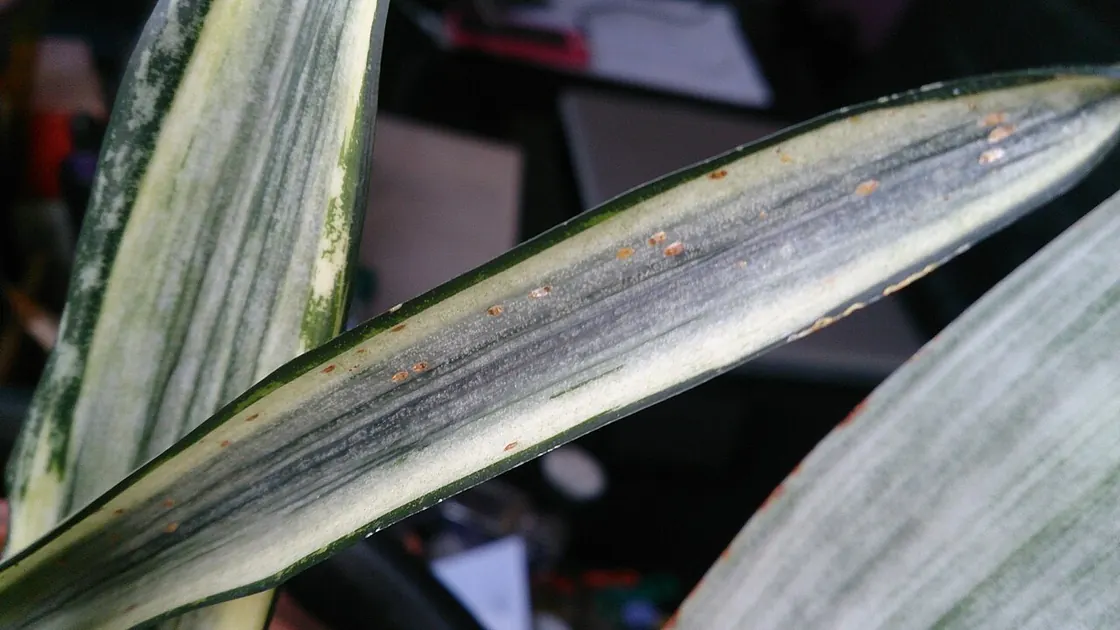
On rubber plants, separate, firmly attached bumps along woody stems are often scale insects. Check whether each bump lifts from the surface, and look for sticky residue under leaves or near stem joints before removing anything.
Why it happens on a rubber plant
Rubber plant is a tropical evergreen tree from South and Southeast Asia. Indoors, it grows upright with thick, woody stems and large, leathery leaves. Stem joints and leaf undersides can provide sheltered places for scale to settle. Its firm stems also have natural scars where leaves were attached, so a bump integrated into the stem may be a growth mark rather than an insect.
Likely causes, most common first
Scale insects
How to tell. Scale often appears as distinct, oval or rounded shells attached to stems, leaf veins, or leaf undersides. Look closely at several bumps; they may be different sizes, and some scale can leave sticky honeydew. A bump that can be gently lifted is more suggestive than one continuous with the stem.
What to do. Isolate the plant and inspect stem joints and both sides of nearby leaves. For a few bumps, gently lift them with a fingernail or cotton swab without scraping the bark. Wipe leaves and stems with a damp cloth, then check weekly for new bumps. See the scale-insects guide if they return.
Natural leaf scars
How to tell. Rubber plants develop leaf scars where older leaves dropped. These marks are usually fixed in place, aligned around the stem at former leaf attachments, and match the stem's surface rather than sitting like separate shells.
What to do. Compare the bump with nearby leaf attachment points and watch whether it changes. If it is part of a stable scar and there is no stickiness or spread, leave it in place and continue routine checks.
Dried latex or healed damage
How to tell. A small raised patch can form where the stem was nicked or a leaf was removed. Ficus elastica releases milky latex when injured; dried residue may remain near the wound, but it is not a separate insect shell.
What to do. Look for a nearby cut, scrape, or old leaf-removal point. Do not pick at attached tissue. If the mark is dry and stable, leave it alone; if fresh sap is present, blot it gently and avoid further damage while monitoring.
When it is normal
A single, stable bump at an old leaf attachment may be a natural leaf scar. It is less concerning if it is continuous with the stem, does not spread, and there is no sticky residue or similar bumps on nearby leaves.
Keeping it from coming back
Inspect the stems, leaf joints, and undersides of leaves whenever you clean or check the plant. Keep newly acquired plants separate while you look them over, and check nearby plants if you find scale. Remove a few insects early, wipe accessible surfaces, and revisit the same spots weekly for new bumps.
The general guide
For any plant, see Hard bumps on stems: check for scale. For everyday needs, see Rubber plant care.