 PlantPal
Pothos cottony clumps: causes and what to check
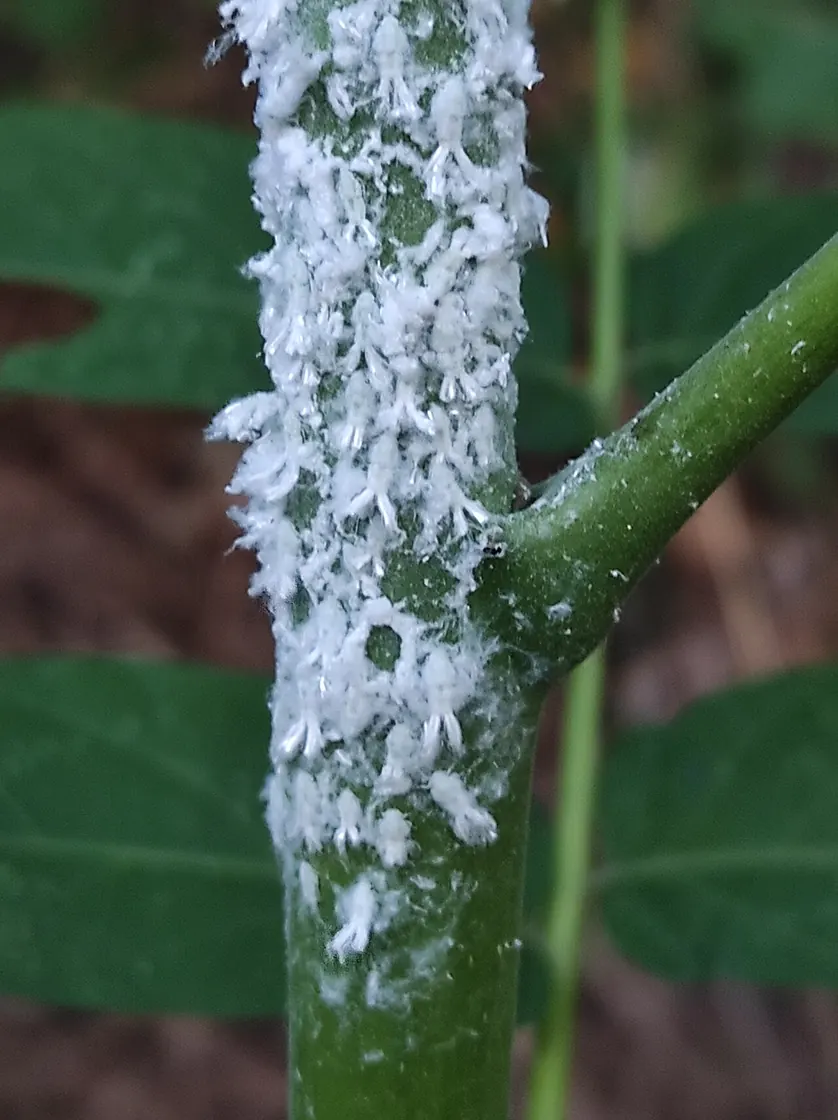
On pothos, cottony clumps are often mealybugs hiding at leaf joints or along stems. First inspect those spots and the undersides of leaves for oval insects, sticky residue, or clumps that return after wiping.
Why it happens on a pothos
Pothos is a tropical climbing vine with stems that trail or attach as they grow. Its aerial roots form at the stem nodes, where leaves join the stem. These joints and the dense growth of a trailing plant can give mealybugs places to hide. The leaves are usually glossy, so sticky residue or clusters may be easier to spot when you check underneath and along the stems.
Likely causes, most common first
Mealybugs on stems and leaves
How to tell. Mealybugs often form distinct white, waxy clumps at leaf joints, on stems, or underneath leaves. Look closely for oval insects within the wax and sticky residue on leaves below. Clusters that return in the same spots can also point to an active infestation.
What to do. Move the pothos away from other plants and check nearby plants too. For small clusters, wipe them off with a damp cotton swab, using a fresh swab for each plant. Check the same joints and new growth again over the next few weeks. See the mealybugs guide for more.
Lint or loose fibers
How to tell. A loose white fiber can catch on a pothos stem or leaf and look cottony from a distance. It usually has no oval insects or sticky residue, and it does not form repeated clumps in leaf joints. Check whether the material lifts away easily.
What to do. Remove the material with a damp cloth or swab, then inspect the nearby stem, leaf joints, and leaf undersides. If it does not return and you find no insects or sticky residue, continue ordinary checks. If clumps reappear, look more closely for pests.
Root mealybugs
How to tell. Less often, mealybugs can live around the roots rather than on the leaves and stems. This is harder to confirm from aboveground clumps alone. If the plant is declining and white waxy material appears around the root ball or inside the pot, inspect the roots.
What to do. If you have a reason to check the roots, ease the plant from its pot and look for white waxy patches among them. Keep it apart from other plants while you inspect. If you find pests, remove affected material where practical and consult the mealybugs guide for next steps.
When it is normal
Pothos does not normally grow cottony clumps. A single loose fiber or bit of lint may be incidental, especially if it wipes away and does not return. Recheck the area if you see repeated clumps, insects, or sticky residue.
Keeping it from coming back
When bringing home a pothos or moving it near other plants, inspect the leaf joints, stems, and undersides of leaves. Keep stems from becoming so crowded that you cannot check them easily. If you find a clump, isolate the plant, wipe away small clusters, and recheck the same spots and new growth over the following weeks.
The general guide
For any plant, see Cottony clumps: check for mealybugs. For everyday needs, see Pothos care.