 PlantPal
Pothos brown leaf tips and edges: causes and what to check
On pothos, brown tips often follow a root ball that has dried too far or repeated wet-dry swings; fertilizer salts can also contribute. Feel the mix below the surface and check for a crust before changing humidity.
Why it happens on a pothos
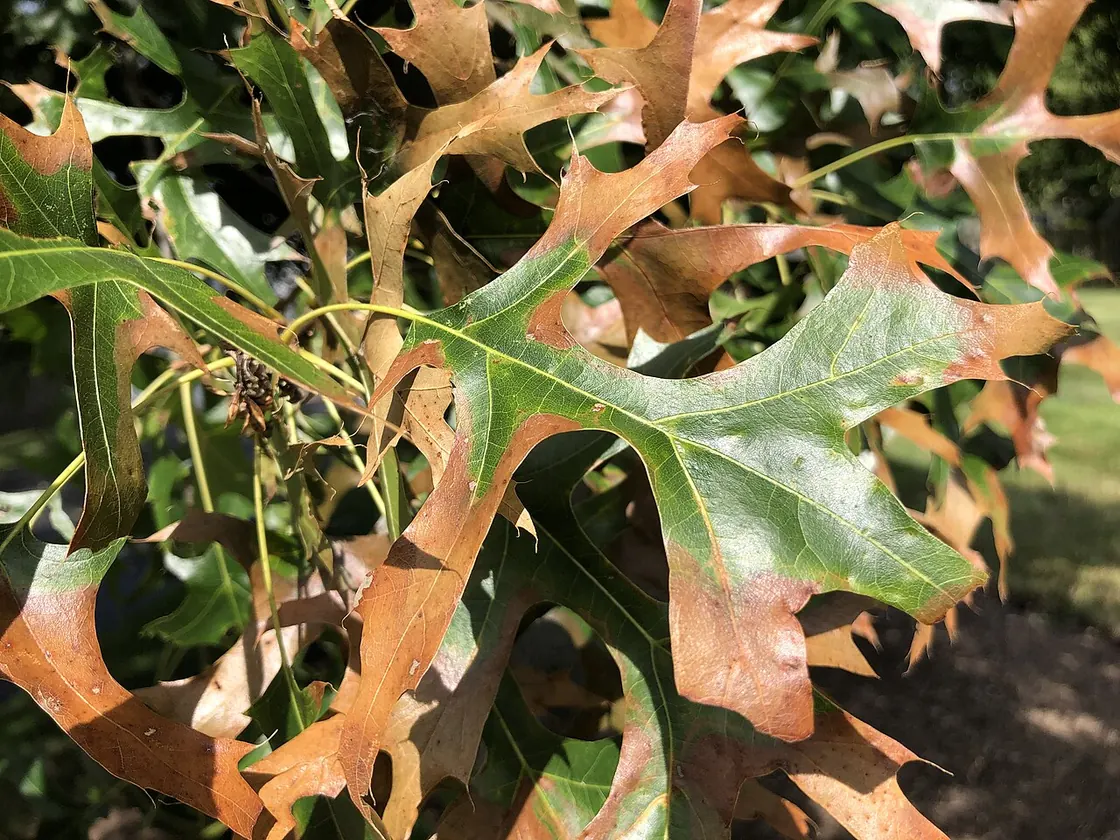
Pothos is a tropical evergreen vine that climbs using aerial roots. Indoors, it is usually grown with juvenile leaves and tolerates a range of room conditions. Its leaves can still develop brown edges when roots stay too dry or too wet. Check moisture through the root ball, not just at the surface, especially in a pot with dense or compacted mix.
Likely causes, most common first
The root ball has dried too far
How to tell. The mix may feel dry well below the surface, and the pot may feel unusually light. Browning often starts at leaf tips and can affect several leaves after the root ball has dried too far or watering has been uneven.
What to do. If the mix is dry through much of the pot, water slowly until excess drains from the holes. Empty the saucer or cachepot. Afterward, let the upper part of the mix dry before watering again, and check the pot rather than following a fixed schedule.
Fertilizer salts have built up
How to tell. A pale or whitish crust on the mix or pot rim can suggest mineral or fertilizer residue. This is more likely after frequent feeding or using hard tap water, especially if the mix is not flushed occasionally.
What to do. Pause feeding while you check whether new leaves develop normally. If the pot drains freely, run water through the mix and let it drain completely. Avoid adding fertilizer to dry mix, and resume only sparingly during active growth.
Roots are staying too wet
How to tell. The mix stays wet for a long time, the pot feels heavy, or leaves yellow as well as developing brown edges. Check that the inner pot has drainage and that roots are not sitting in water inside an outer container.
What to do. Pour away standing water and allow the mix to dry partly before watering again. If it remains soggy or smells unpleasant, inspect the roots. Trim any soft, dark roots with clean scissors and repot into fresh, free-draining mix in a pot with drainage.
Hot or cold air is reaching the leaves
How to tell. Damage may be strongest on the side facing a heater, air-conditioning outlet, or draft. Pothos usually adapts to ordinary indoor humidity, so check direct airflow and root moisture before assuming the room is too dry.
What to do. Move the plant out of the direct path of heated or cold air, while keeping it in suitable indirect light. Check the mix again after moving it, since a warmer or brighter spot can dry the pot more quickly.
When it is normal
One older, lower leaf may yellow and brown as pothos sheds it, especially while new growth continues. If several leaves develop fresh brown edges, or the damage spreads inward, check moisture, roots, and recent feeding.
Keeping it from coming back
Feel the mix below the surface and lift the pot to judge how quickly it dries. Water thoroughly when the upper mix has dried, then let excess drain away. Use a pot with drainage, avoid leaving water in an outer pot, and feed modestly during active growth. Keep leaves clear of direct heater and air-conditioning flow.
The general guide
For any plant, see Brown leaf tips and edges. For everyday needs, see Pothos care.