 PlantPal
Moth orchid root rot: causes and what to check
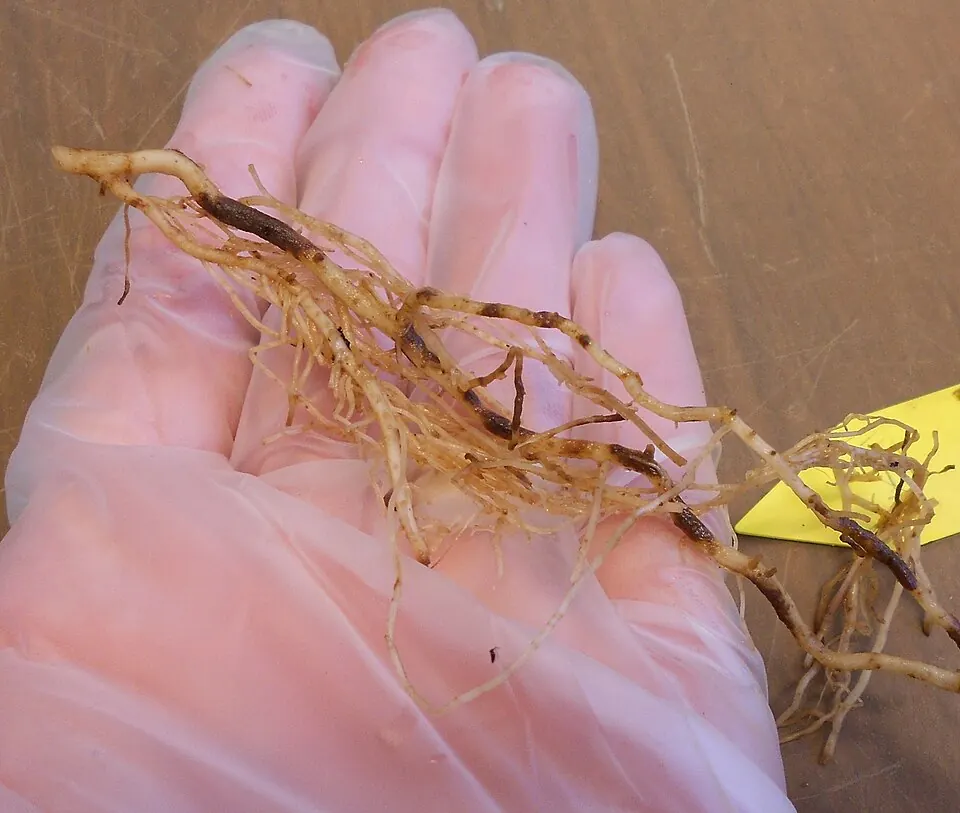
On moth orchids, roots that stay wet in dense or poorly drained mix are a common reason for rot. First feel accessible roots: firmness matters more than color; mushiness is a stronger clue.
Why it happens on a moth orchid
Phalaenopsis are epiphytic orchids: in nature, their roots attach to trees rather than grow in ordinary soil. Their thick roots have a water-absorbing outer layer and need air around them. Roots may look green when wet and silvery when dry, and some grow outside the pot. Color alone is not a reliable sign of rot.
Likely causes, most common first
Mix stays wet too long
How to tell. Feel the mix and check its center, not just the surface. If it is still wet when the plant is wilting, or the roots feel soft and collapse when gently touched, prolonged wetness may be harming them.
What to do. Empty any standing water and do not water again while the mix is wet. Check that the pot drains freely. If roots are mushy, remove only those parts with clean shears and repot in fresh orchid mix.
Old, broken-down potting mix
How to tell. Orchid bark breaks down over time. A mix that has become fine, compacted, or persistently soggy can limit airflow around roots. Check whether bark pieces crumble easily or the pot stays heavy and damp.
What to do. If the mix is compacted or breaking down, gently remove it from the roots. Use fresh orchid potting mix and a clean pot with drainage. Keep firm roots, even if their color is dark, and trim only soft, damaged portions.
Water trapped in an outer pot
How to tell. Check inside any decorative cover pot after watering. Water may collect beneath the inner pot even when the orchid pot has drainage holes. The base of the root ball can then remain wet for too long.
What to do. Lift the inner pot out and pour away collected water. Let it drain before returning it to the cover pot. Make sure the inner pot has open drainage holes and does not sit in water.
When it is normal
A root that looks brown or dark is not necessarily rotten if it remains firm. Moth orchid roots can also be green when wet, silvery when dry, or grow beyond the pot; these appearances alone are not a problem.
Keeping it from coming back
Use an airy orchid mix and a pot with drainage, and replace mix when it becomes compacted or breaks down. After watering, let excess water drain fully and empty the cover pot. Before watering again, feel the mix and lift the pot; avoid keeping it continually wet.
The general guide
For any plant, see Could it be root rot?. For everyday needs, see Moth orchid care.