 PlantPal
Moth orchid cottony clumps: causes and what to check
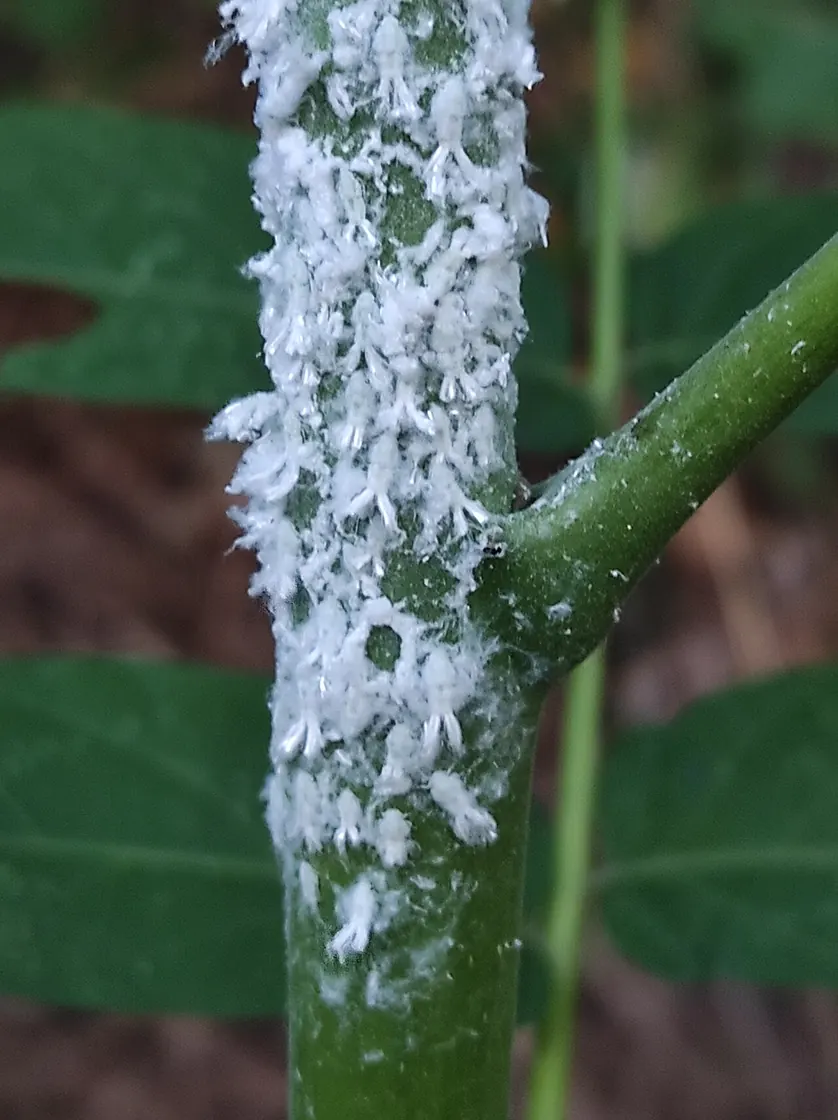
On a moth orchid, distinct white cottony clusters in leaf joints, along the flower spike, or under leaves are often mealybugs. First inspect these sheltered spots for small oval insects and sticky residue, then separate the orchid from nearby plants.
Why it happens on a moth orchid
Phalaenopsis are tropical epiphytic orchids with broad leaves growing from a short stem and thick roots covered by a spongy layer called velamen. The tight leaf joints and the places where flower spikes meet the stem offer sheltered spots where mealybugs can hide. Check these folds closely, as well as leaf undersides and the spike.
Likely causes, most common first
Mealybugs
How to tell. Look for separate cottony clumps in leaf joints, along the flower spike, or beneath leaves. A small oval insect may be visible in the wax, and leaves below may feel sticky from residue.
What to do. Move the orchid away from other plants and inspect nearby plants too. For a small cluster, wipe it off with a damp cotton swab, using a fresh swab for each plant. Recheck the same folds and new growth over the next few weeks.
Scale insects
How to tell. Some orchid scale insects look like fixed white or tan bumps rather than loose cottony clusters. Check along leaf undersides, the stem, and the flower spike. They may be accompanied by sticky residue.
What to do. Keep the orchid separate while you check whether the bumps are insects. You can carefully wipe or lift off a small number without scraping the leaves. Inspect the plant again, and use the mealybugs guide for general pest-checking advice.
Fuzz, debris, or surface growth
How to tell. Loose fibers or debris may catch in leaf folds but will not contain oval insects. Fuzzy growth is more likely on damp, decaying bark than in clean leaf joints. Check whether the material wipes away and where it is growing.
What to do. Gently remove loose debris with a damp cloth and look beneath it. If fuzz is on the potting mix, remove decaying material and let the mix dry appropriately between waterings. Keep checking the leaf joints for any returning insect clusters.
When it is normal
Moth orchid roots can look silvery white when dry and turn green when wet. This is their normal outer covering, not a cottony clump. Roots are rounded and firm, unlike a cluster of waxy insects tucked into a leaf joint.
Keeping it from coming back
When bringing home an orchid, keep it apart from other plants while you inspect it. Regularly look in leaf joints, under leaves, and around flower spikes, especially where growth is crowded. Remove dead plant material, and check nearby plants if you find insects. These checks can help catch a problem early.
The general guide
For any plant, see Cottony clumps: check for mealybugs. For everyday needs, see Moth orchid care.