 PlantPal
Fiddle leaf fig yellow leaves: causes and what to check
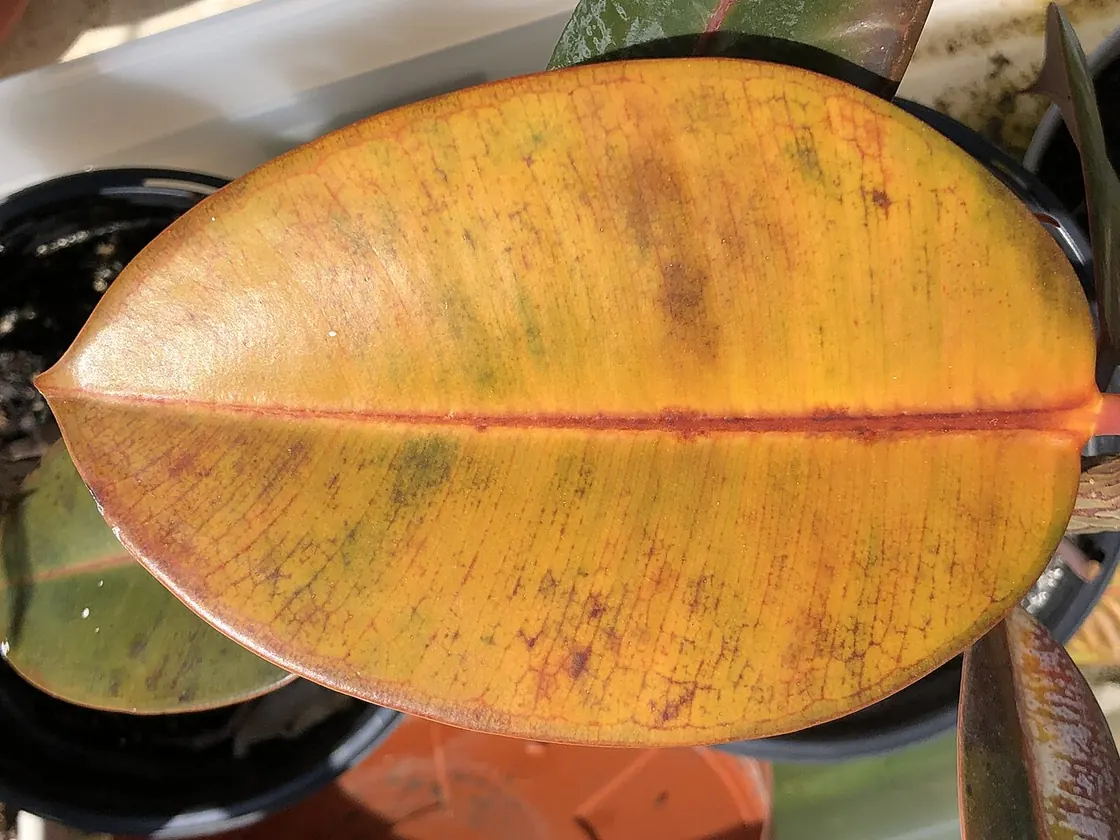
On fiddle leaf figs, several yellow leaves often point to potting mix staying too wet and roots losing air. First feel the mix below the surface, lift the pot, and check that water can drain freely.
Why it happens on a fiddle leaf fig
Fiddle leaf fig is a tropical West African evergreen tree with large, leathery leaves. Indoors, it grows upright and keeps its foliage year-round when conditions suit it. Its roots need air as well as moisture, so dense mix or a pot that holds water can keep roots wet. Large leaves also make changes in light or watering easy to notice.
Likely causes, most common first
Mix staying too wet
How to tell. Several lower or scattered leaves yellowing can follow a mix that stays wet. Feel the mix below the surface and lift the pot; damp mix and a heavy pot long after watering suggest slow drying. Check that drainage holes are open.
What to do. Let the mix dry somewhat before watering again, then water thoroughly and empty the saucer. If it stays soggy, check the roots and drainage. Dark, soft roots can indicate damage; remove dead roots and repot in fresh, free-draining mix.
Mix becoming too dry
How to tell. If the mix is very dry below the surface and the pot feels light, the plant may have gone too long without water. Leaves can droop or develop dry, brown edges as well as yellowing. Check whether water runs straight through.
What to do. When the mix is dry and the plant needs water, soak it evenly until water drains from the holes, then empty the saucer. If water runs through channels, water slowly in several passes so the root ball can absorb it.
A sudden change in conditions
How to tell. Yellowing or leaf drop that starts after moving the plant, changing its light, or exposing it to a cold draft can reflect stress from the change. Look for a recent shift in its position or temperature, and check whether the mix is also staying wet.
What to do. Keep the plant in a bright spot with indirect light and away from cold drafts or heating vents. Avoid moving it repeatedly while it adjusts. Continue checking the mix before watering, since a changed light level can also change how quickly the pot dries.
Sap-feeding pests
How to tell. Spider mites can cause fine pale stippling and sometimes webbing under leaves. Scale insects may look like small fixed bumps on stems or leaf undersides. Inspect both sides of leaves and along stems, especially if yellowing appears with speckling.
What to do. Isolate the plant. Wipe visible insects away and wash the leaves, including their undersides, while protecting the potting mix from excess water. Recheck the plant and repeat physical cleaning as needed. See the general pest guide for more steps.
When it is normal
A single oldest lower leaf may yellow and fall as the plant grows, especially when newer leaves above look healthy. Several leaves yellowing, or changes reaching newer growth, calls for a closer check.
Keeping it from coming back
Give the plant bright, indirect light and keep it away from cold drafts. Use a pot with drainage holes and a mix that drains freely. Before watering, feel the mix below the surface and lift the pot; water thoroughly when the mix has dried enough, then empty the saucer. Avoid frequent changes in position.
The general guide
For any plant, see Why are leaves turning yellow?. For everyday needs, see Fiddle leaf fig care.