 PlantPal
Calathea yellow leaves: causes and what to check
Several yellowing leaves on a Calathea often point to roots staying too wet, especially in a dense mix or pot without free drainage. First feel the mix below the surface and check whether the pot drains.
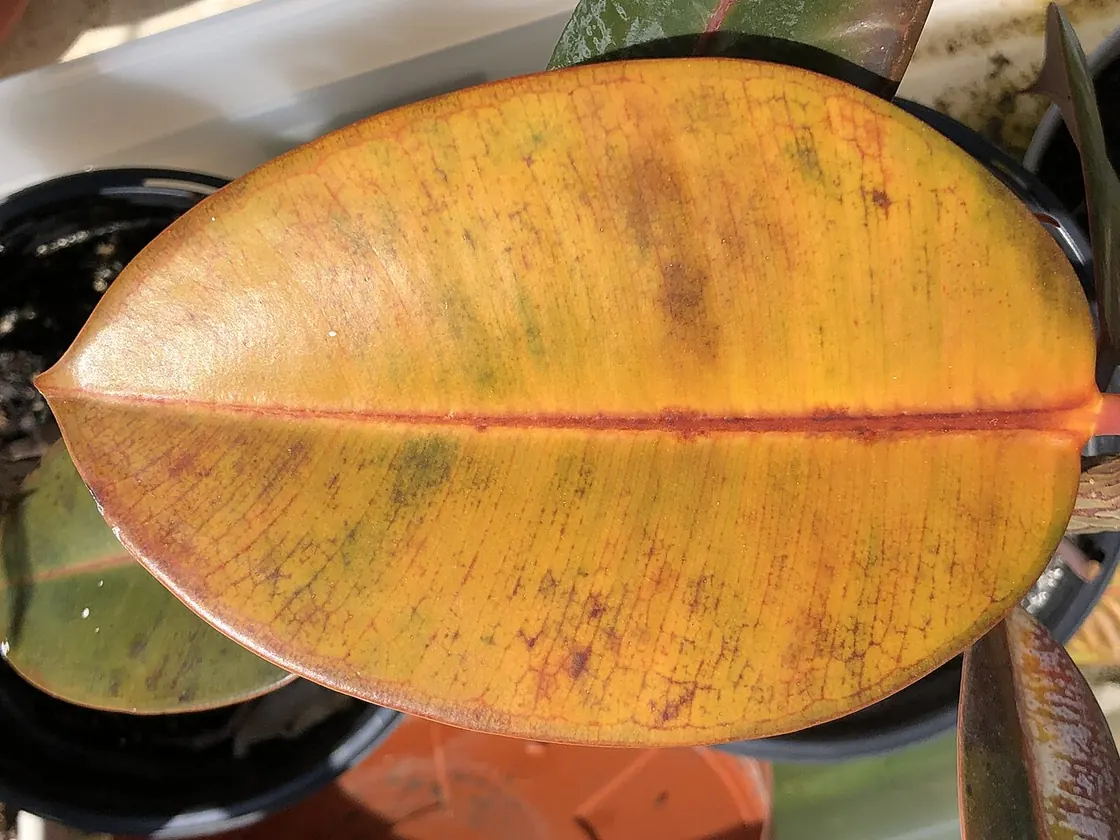
Why it happens on a calathea
Calatheas, now often classified as Goeppertia, are tropical plants that grow beneath forest canopies. Their leaves are adapted to filtered light, and their roots do best in a mix that holds some moisture but drains freely. This balance means a pot that stays soggy can stress roots, while a mix that dries out completely can also cause trouble.
Likely causes, most common first
Mix staying too wet
How to tell. If several leaves yellow while the mix remains damp well below the surface, roots may be short of air. A pot that feels heavy, standing water, or a sour-smelling mix adds concern. Check drainage and roots if wilting continues.
What to do. Pour water out of the saucer or cover pot. Let the upper mix begin to dry before watering again, but do not let the root ball become bone dry. Make sure drainage holes are open; inspect roots if decline continues.
Mix drying too much
How to tell. A very light pot and dry mix below the surface can mean the roots have been short of water. Leaves may curl, droop, or yellow. Check the mix rather than relying on how the surface looks.
What to do. If the mix is dry and the plant needs water, water thoroughly until excess drains away, then empty the saucer. If water runs down the sides without soaking in, water slowly in stages so the mix can absorb it.
Too much direct sun
How to tell. Leaves near a sunny window may turn pale or yellow, sometimes with dry, faded patches. This is more likely if the plant receives strong direct sun, rather than bright light filtered through a curtain or from farther inside the room.
What to do. Move the plant a little farther from the window or filter the direct sun. Keep it in bright, indirect light and compare new growth over time. Avoid moving it into a much darker spot, which can slow growth.
Sap-feeding pests
How to tell. Spider mites or thrips can cause pale speckling and yellowing. Look closely under leaves and along veins for tiny moving insects, fine webbing, or silvery marks. Pests are more likely when damage is scattered across several leaves.
What to do. Separate the plant from nearby plants. Rinse or wipe both sides of the leaves, and remove badly damaged leaves if needed. Check again for insects or webbing. See the general pest guide for further steps.
When it is normal
One oldest lower leaf turning yellow can be normal as the plant sheds aging foliage, especially when newer leaves look healthy. Remove it once it is mostly yellow. Several leaves changing at once call for checks of the mix, light, and leaf undersides.
Keeping it from coming back
Use a pot with drainage and a loose mix that holds some moisture without staying soggy. Feel below the surface before watering, then let excess water drain away. Keep the plant in bright, indirect light and check leaf undersides when you notice changes. Avoid leaving the pot standing in water.
The general guide
For any plant, see Why are leaves turning yellow?. For everyday needs, see Calathea care.