 PlantPal
Spider plant root-bound: causes and what to check
Spider plants grow quickly and can fill a small pot, but a root at the drain hole alone does not mean they need repotting. Slide out the root ball and check for circling roots and little potting mix.
Why it happens on a spider plant
Spider plant is native to parts of Africa and grows as a clump of arching leaves, sending out runners with plantlets. Its thick, fleshy roots store water and can become crowded as the plant grows, so it often tolerates a relatively full pot. This makes a single root at a drainage hole a weak clue; judge the whole root ball and whether the mix still wets and dries evenly.
Likely causes, most common first
The root ball has filled the pot
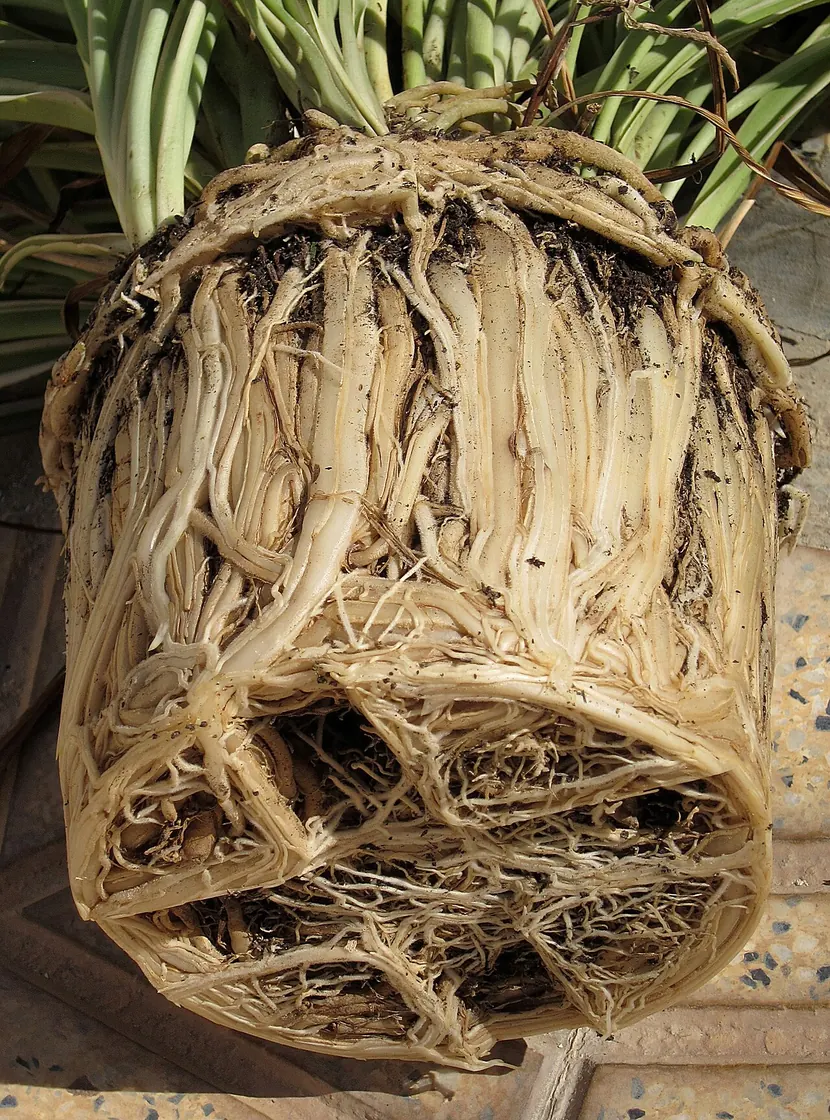
How to tell. When the plant is lifted, roots may form a tight circling mat around the outside or across the bottom, with little potting mix visible. The root ball may come out as a firm shape, and water can run through before the center becomes evenly moist.
What to do. If roots crowd most of the pot and watering has become difficult, move it to a container only one size larger with drainage and fresh, well-draining potting mix. Gently loosen only the outermost circling roots; keep firm, healthy roots intact, and water the mix through.
Roots at the drainage hole are mistaken for crowding
How to tell. A few thick roots through drainage holes can be normal, especially on a mature spider plant. If the root ball still has plenty of mix and is not tightly packed, and water soaks in and drains normally, the plant may not have outgrown its pot.
What to do. Do not cut roots just because they show at a hole or move the plant up automatically. Check the root ball when it is reasonably dry, and return it to the same pot if roots are not densely packed. Keep drainage holes clear.
Fast drying has another cause
How to tell. A small pot, warm bright location, or very dry or compacted mix can make water disappear quickly without a packed root ball. If roots are not densely circling and the mix has shrunk from the sides or repels water, dryness alone is not proof of crowding.
What to do. Check mix moisture below the surface and wet it slowly so it can absorb. If the old mix is broken down or hard to rewet, refresh it while keeping the plant in the same-size pot if the roots still have room. Reassess after watering.
When it is normal
One or two roots at a drainage hole, a full-looking root ball, or a pot that dries somewhat faster can be normal for this vigorous grower. Repot only when roots densely occupy the pot or watering and growth are affected.
Keeping it from coming back
Use a pot with open drainage holes and a loose, well-draining mix. When checking the plant, compare the root mass with the amount of mix rather than reacting to a root at a hole. Water thoroughly when the upper mix has dried, then let excess drain. Reassess the root ball when watering becomes difficult or roots densely fill the pot.
The general guide
For any plant, see Have the roots outgrown the pot?. For everyday needs, see Spider plant care.