 PlantPal
Spider plant curling leaves: causes and what to check
Spider plant leaves often curl when the root ball is too dry, though soggy roots, pests, or abrupt heat and light changes can also distort growth. First feel the mix below the surface and inspect leaf undersides.
Why it happens on a spider plant
Spider plant is a clumping, rosette-forming herb from tropical and southern Africa, with long, narrow leaves that arch outward. Its fleshy roots can store water, so it may tolerate a brief dry spell, but that does not make persistently wet mix safe. Curling can reflect stress at the roots or on new leaves; compare several leaves and check whether the change is limited to one.
Likely causes, most common first
Dry potting mix
How to tell. The mix may be dry well below the surface, and the pot may feel unusually light. Leaves can look limp or curl along their length. Check moisture with a finger or wooden stick near the root ball, not just at the surface.
What to do. If the mix is dry, water slowly until excess drains from the bottom. Empty the saucer. Then let the upper mix dry before watering again, checking deeper too; do not keep adding small amounts just because the leaves remain curled.
Waterlogged roots
How to tell. If the mix stays wet, the pot feels heavy, or drainage is poor, roots may be short of air. Yellowing or soft leaves can occur too. If the plant remains distressed, slide it from the pot and check for dark, mushy roots.
What to do. Let excess water drain and empty any saucer or cachepot. If the mix is staying wet, check that the pot has drainage holes and that roots are not rotting. Trim mushy roots with clean scissors and repot in fresh, free-draining mix if needed.
Sap-feeding pests
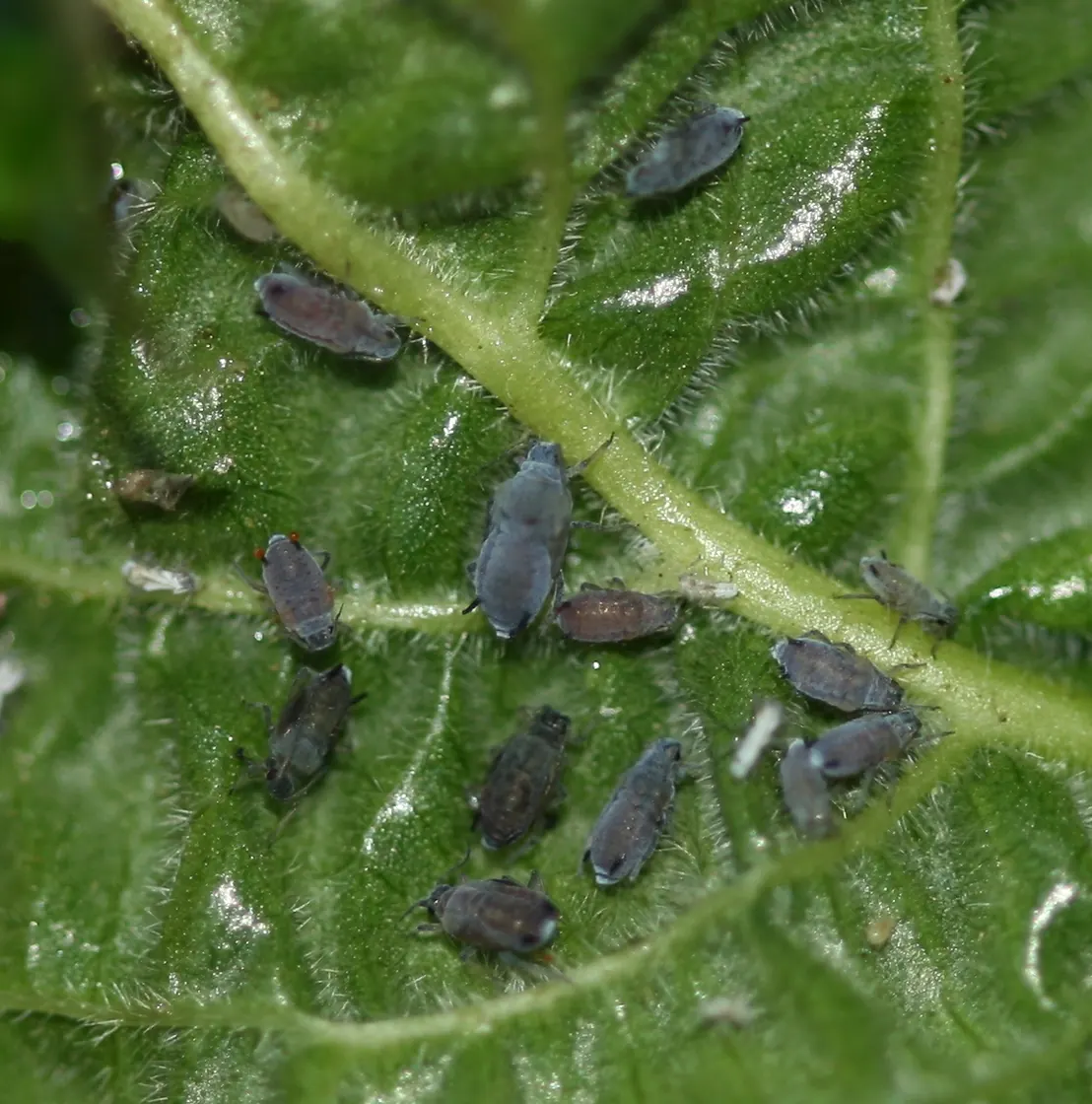
How to tell. Look inside the curl and under leaves for tiny insects, fine webbing, sticky residue, or pale and silvery marks. These signs can indicate pests such as spider mites or thrips. Check nearby leaves as well, since early infestations can be hard to spot.
What to do. Separate the plant from nearby plants. Rinse leaves, including their undersides, and remove visible insects by hand or with a damp cloth. Keep checking new growth. Use PlantPal's general pest guide for further steps suited to the pest you find.
Heat, drafts, or a sudden light change
How to tell. Curling that began after a move may point to hot, dry air, a cold draft, or stronger direct sun. Check whether leaves near a window, heater, or air vent are affected more than leaves elsewhere on the plant.
What to do. Move the plant to bright, indirect light and away from hot vents, radiators, and cold drafts. Make one change at a time, then watch how new leaves open. Existing curled leaves may not straighten even after conditions improve.
When it is normal
A few older outer leaves may bend or curl as they age, and the plant's narrow leaves naturally arch. If the plant is otherwise firm and new leaves open normally, monitor it rather than trying to straighten old leaves.
Keeping it from coming back
Check the mix before watering and let its upper layer dry between waterings; water thoroughly, then let excess drain. Avoid leaving the pot in standing water. Since the fleshy roots hold some reserve, check moisture deeper in the pot too. Keep the plant in bright, indirect light, away from hot vents and cold drafts, and inspect new growth and leaf undersides when it changes.
The general guide
For any plant, see Why are the leaves curling?. For everyday needs, see Spider plant care.